
Concept study / marine
A vessel-level energy integration scenario.
This concept study describes an intended engineering approach. It is not a customer deployment, completed trial or measured commercial outcome.
Concept rendering · Development programme
Development scenario.
Operating context
A vessel combines propulsion demand, hotel loads and auxiliary systems with constrained installation space and service access.
Proposed integration
The AIM pathway combines modular BatteryBlocks, racks, safety, Energy Manager and Vessel OS with the vessel’s operating requirements.
What needs to be demonstrated
Product safety, usable energy, electrical interfaces, installation suitability and vessel-specific qualification must be validated.
Intended outcome
A serviceable and integrated vessel energy architecture is the development objective. No range, efficiency or reliability improvement has been independently established by this study.
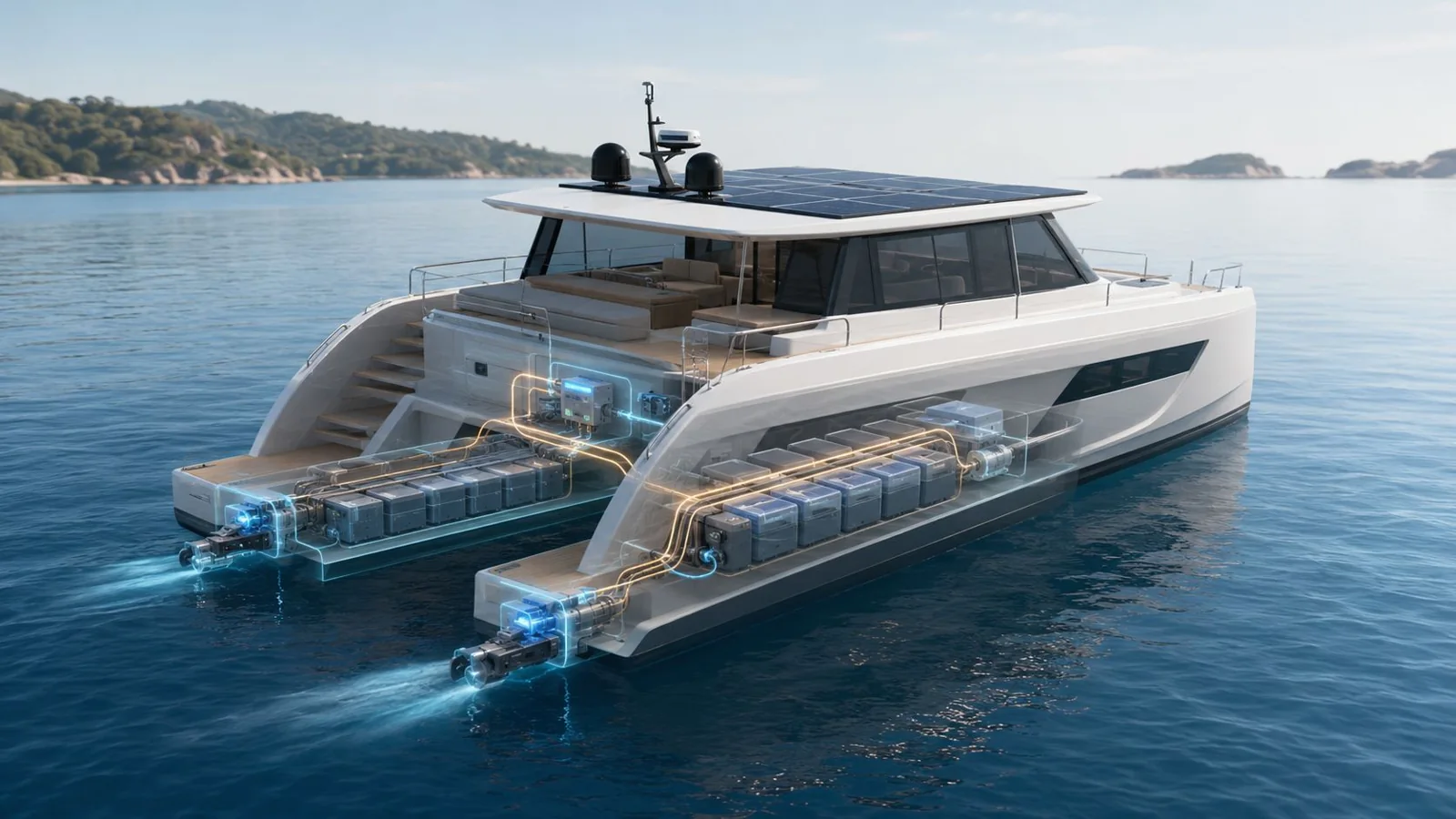
A connected vessel concept.
Illustrative energy-flow and system-placement study.
Next: evidence at product and application level.
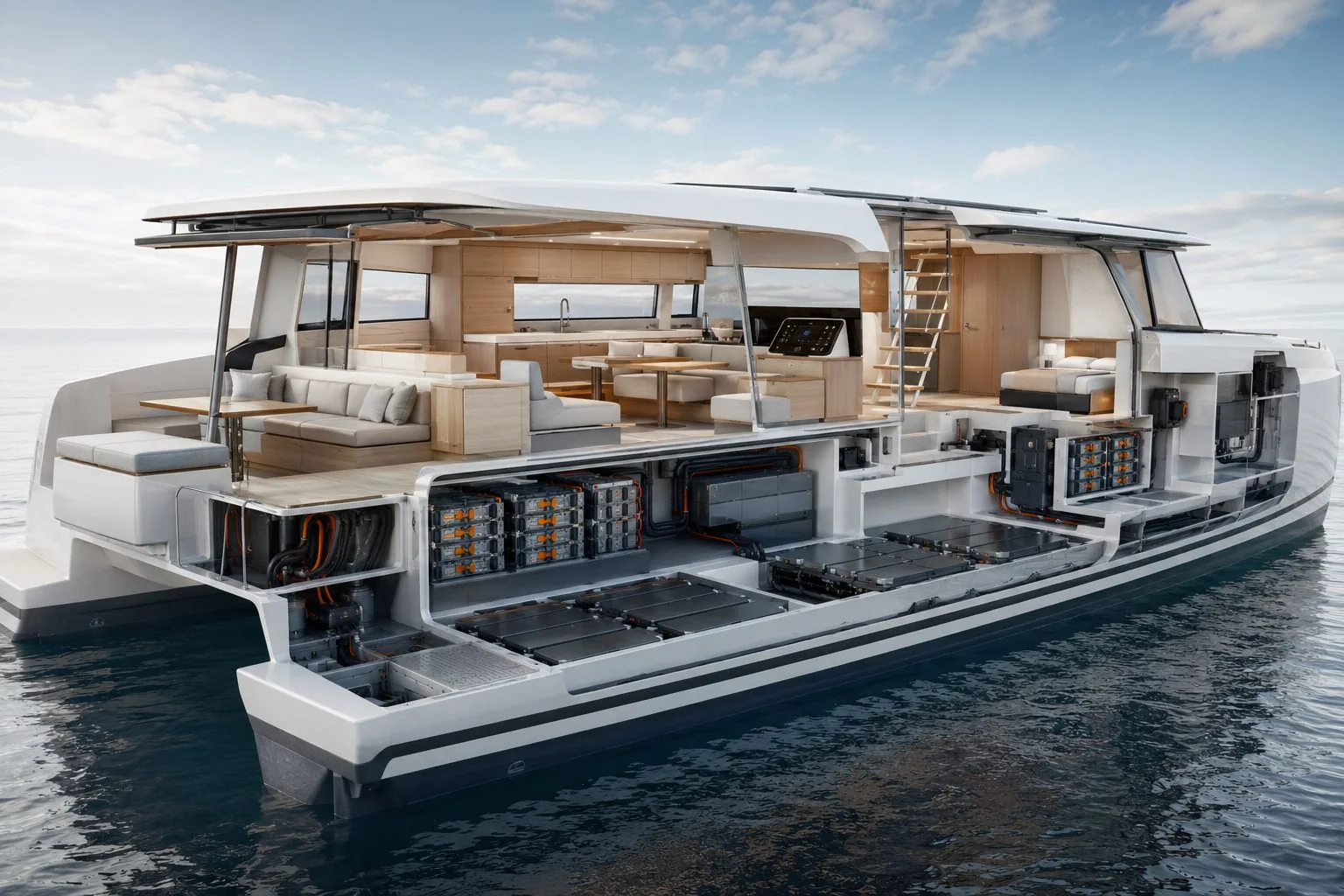
Review the validation programmeIntegration beneath the living space.
The cutaway explores how serviceable modules could fit within vessel architecture.
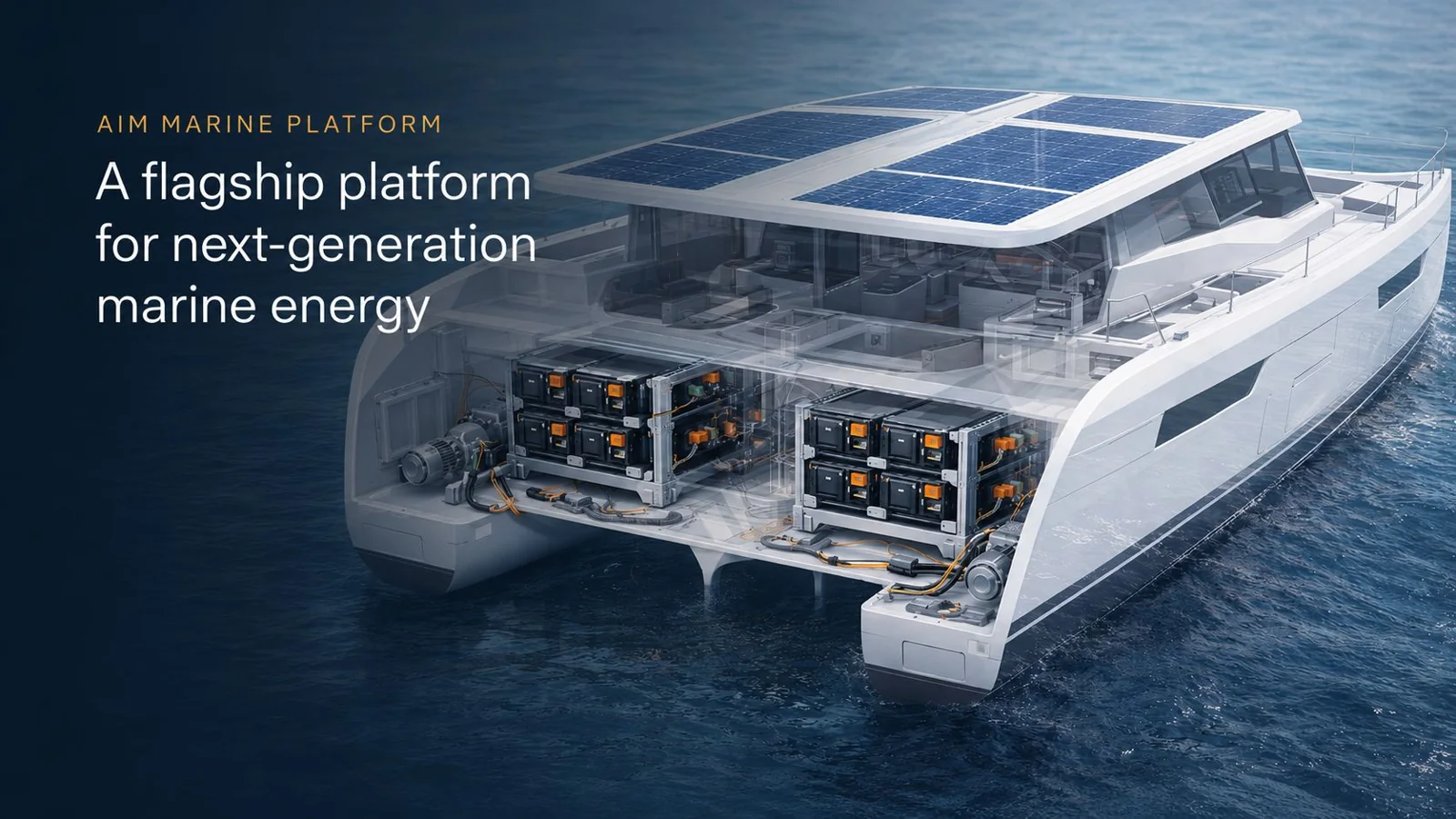
A marine application to work toward.
Concept visualisation; vessel-level engineering and validation remain ahead.
Build the next stage with AIM