AIM Marine Systems

Scalable energy systems for next-generation vessels.

Integrated propulsion, storage, and solar architectures designed for real-world marine deployment.

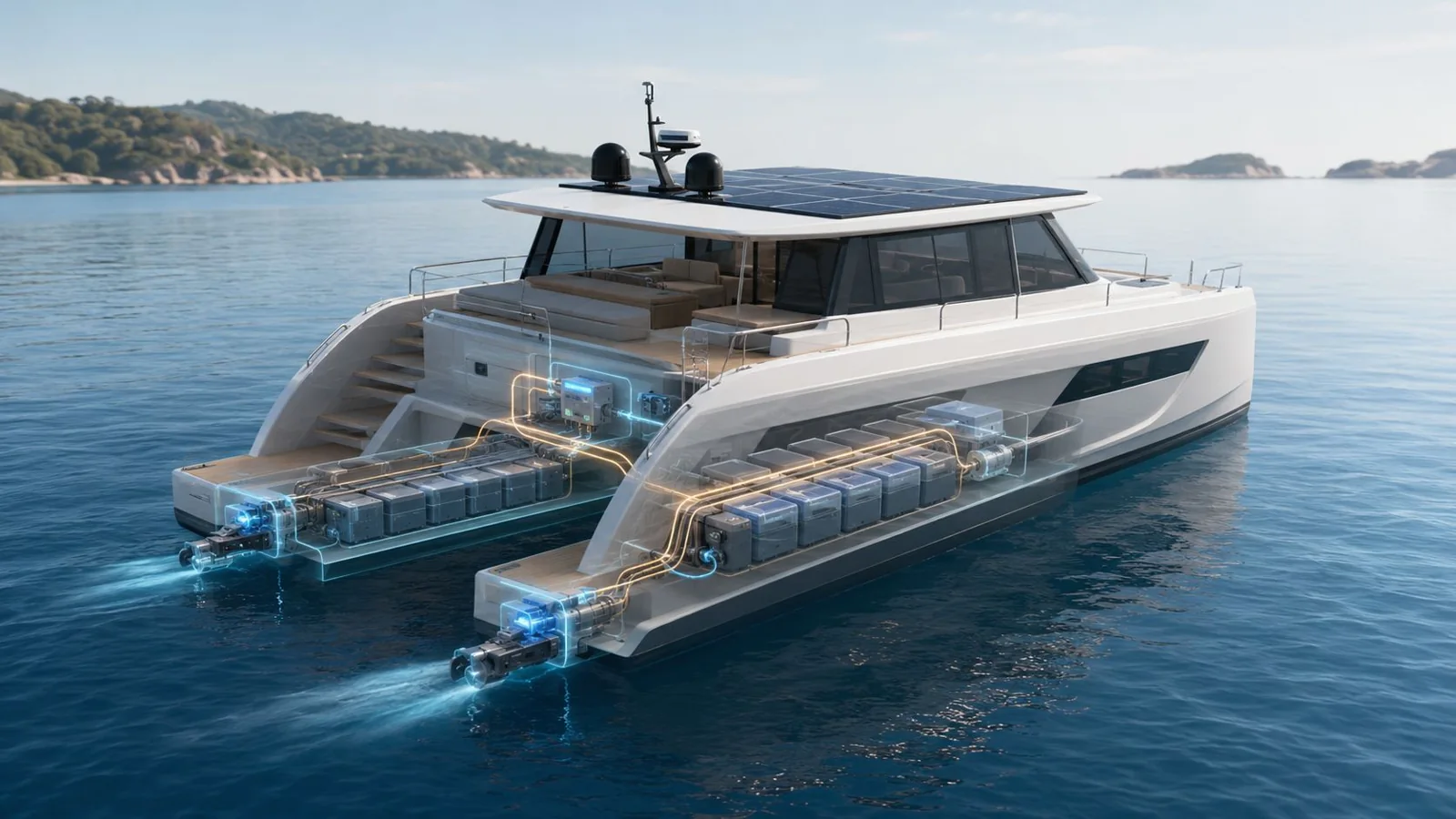
Marine energy system architecture for vessel electrification

Electric Marine Systems Are Still Limited

Marine electrification is advancing quickly, but vessel energy systems still face practical limitations. Battery capacity, thermal behavior, safety, weight distribution, certification pathways and onboard integration remain critical challenges for yacht builders, vessel operators and marine technology providers.

Range Constraints

Battery capacity limits long-duration operation, onboard autonomy and extended low-emission cruising.

Heavy Systems

Traditional battery systems can increase vessel weight and reduce flexibility in layout and installation.

Low Integration

Energy systems are often added as separate components rather than designed into the vessel platform.

Industry Direction

The global marine industry is moving toward electrified propulsion, onboard energy management and increased energy autonomy. Leading sailing and yacht manufacturers are investing in electric propulsion ecosystems, hybrid energy concepts, regenerative power flows and intelligent vessel energy management.

AIM Concepts develops modular marine energy architectures aligned with this market direction. The objective is to support future vessel electrification with safer, adaptable and scalable energy systems that can be integrated into different vessel formats without relying on a single fixed configuration.

Modular Energy Platform

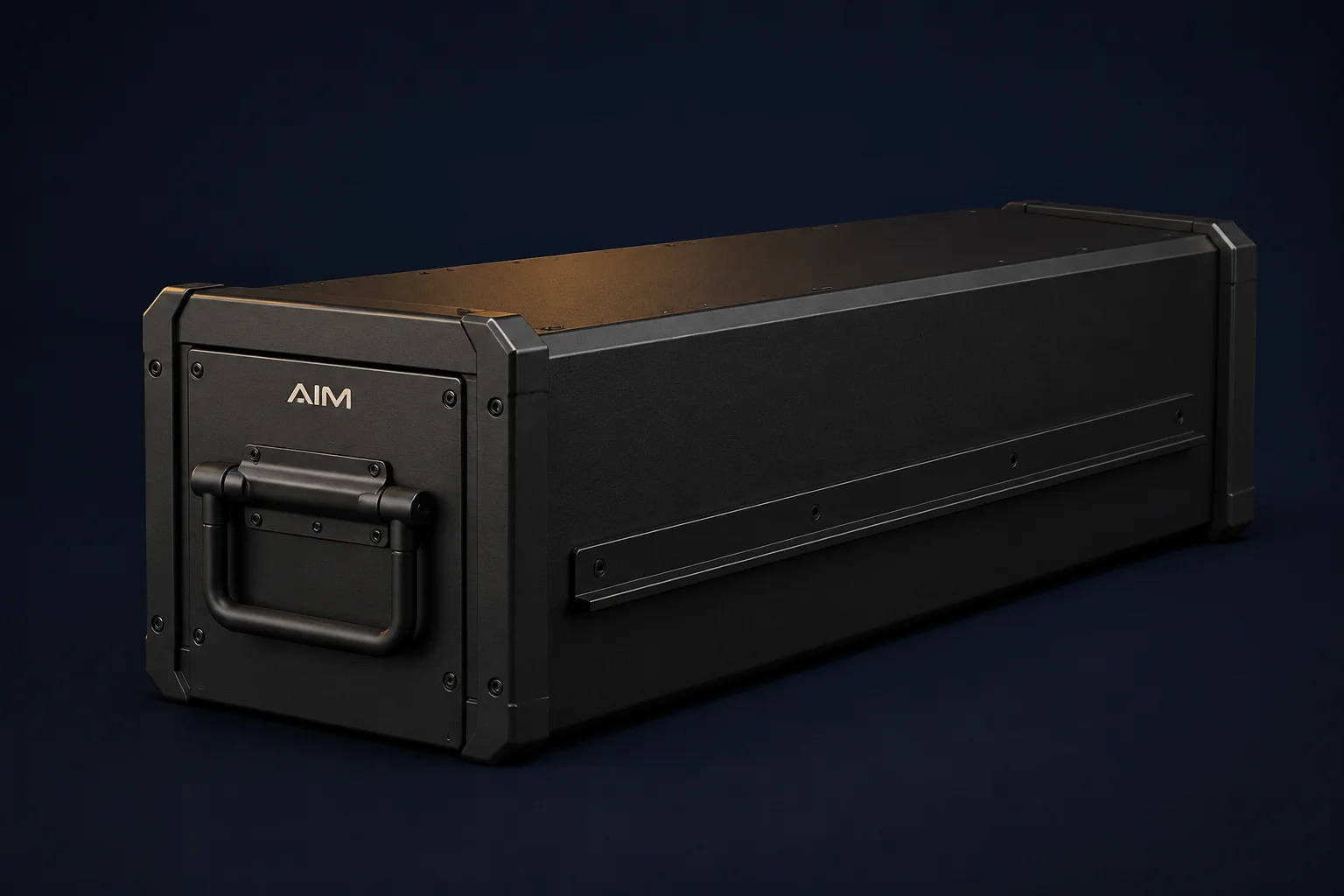
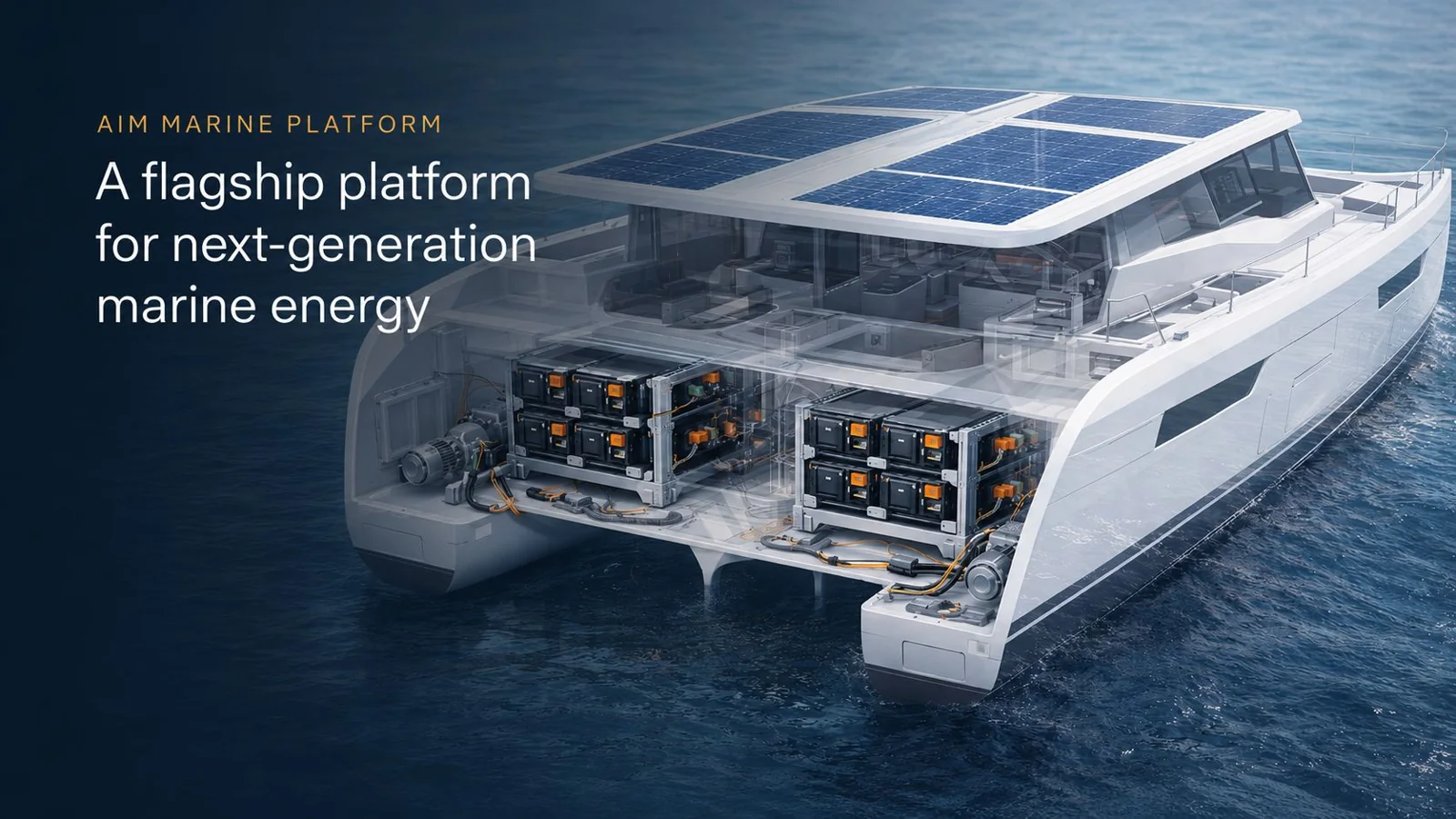
AIM marine systems are based on a distributed, modular battery architecture designed for integration into vessel structures and onboard energy environments. The platform approach can support scalable capacity, serviceable modules and future system upgrades while maintaining a clear integration pathway.

This modular structure is intended to give vessel designers and operators greater flexibility in packaging, installation and energy capacity planning. Instead of forcing one large energy block into the vessel, the architecture can be adapted around available space, weight distribution, service access and operational requirements.

Modular marine battery system for onboard energy storage

Safety and Operational Advantages

Low Temperature Signature

Reduced thermal footprint can support safer onboard operation, improved placement flexibility and lower heat-management pressure.

Non-Flammable Direction

Technology pathways focus on safer energy architectures for demanding marine environments where fire risk must be minimized.

Modular Serviceability

Individual energy modules can support maintenance, replacement, upgrades and future capacity expansion.

Clean System Integration

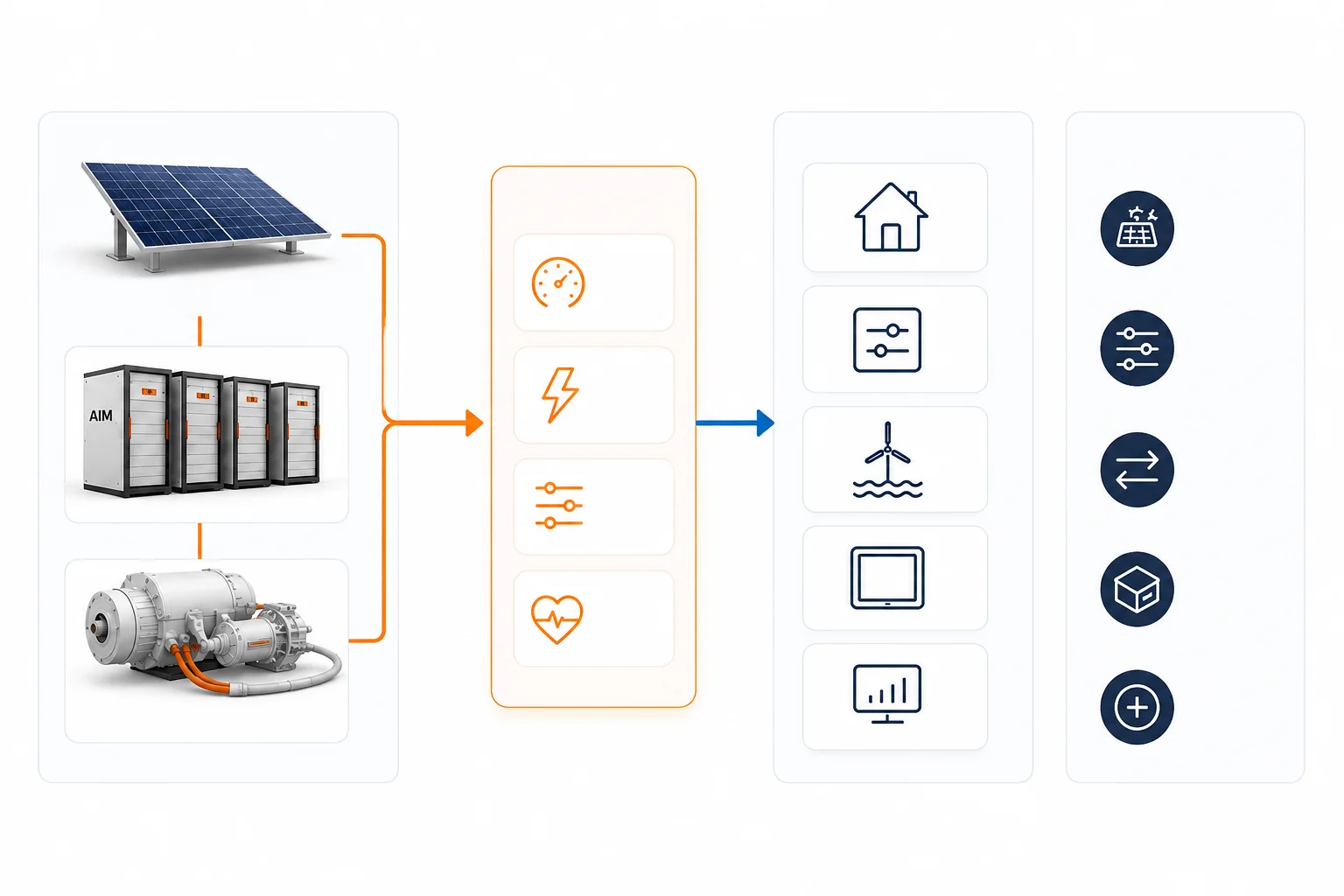
The energy system is designed to operate as a backbone layer, while existing vessel systems can continue to manage loads, control logic and operational behavior. This approach supports integration pathways where new energy capacity can be introduced without unnecessary disruption to the broader vessel environment.

Energy Backbone

Storage, solar and propulsion energy can be coordinated through a unified onboard power layer.

Minimal Disruption

Integration concepts can be developed around existing vessel systems, controls and operating logic.

Data Interface

System architecture can support communication of state, power, limits and safety parameters.

Marine system integration architecture for onboard power management

Designed for Real Deployment

AIM marine systems are developed with practical deployment in mind. This includes modular packaging, energy density, safety behavior, service access, certification awareness and compatibility with marine power-management environments.

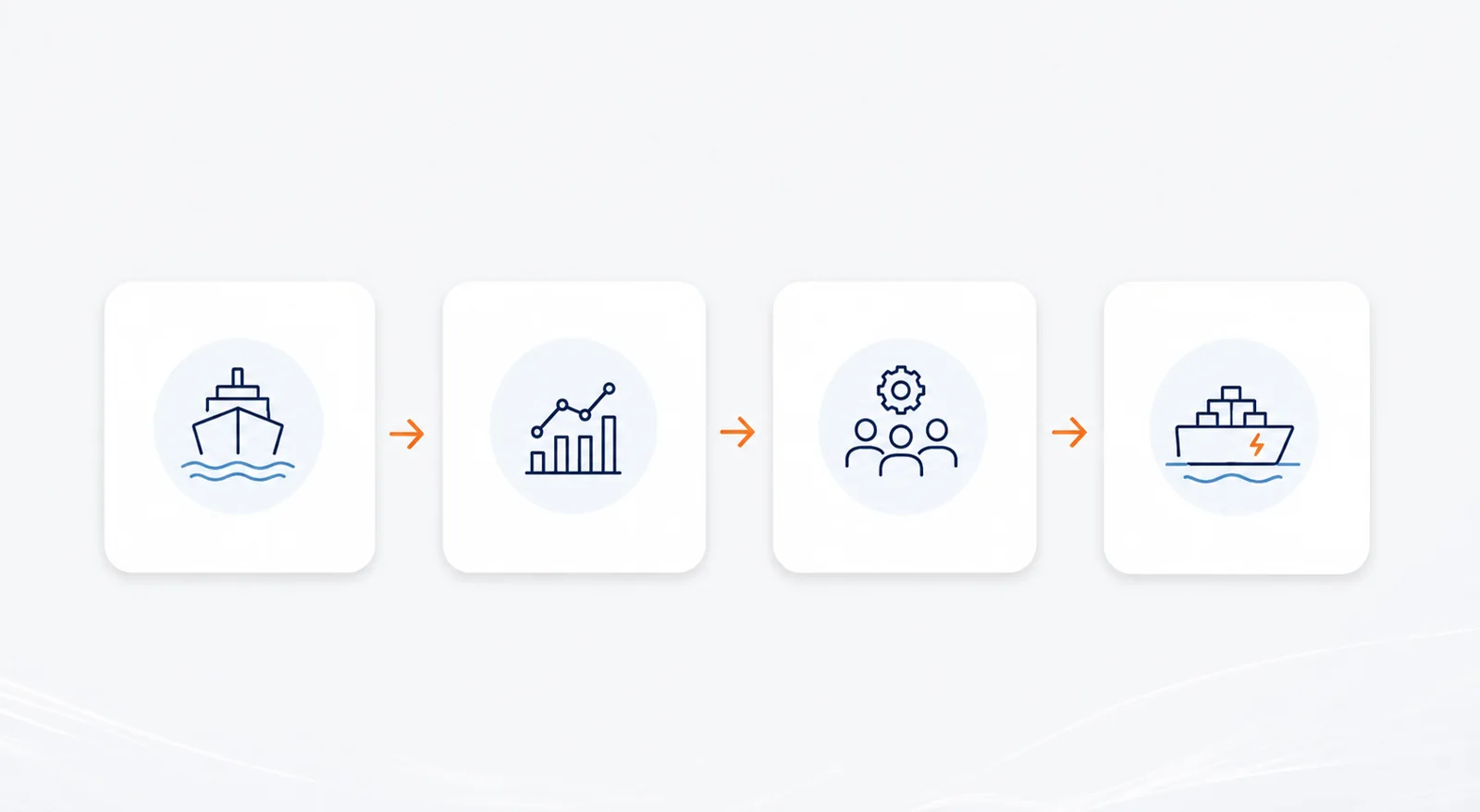
The system maintains a unified architecture across sectors while adapting the interface layer for marine integration. This creates a flexible foundation for future vessel applications, including new builds, retrofit pathways and specialized marine energy systems.

Marine energy deployment roadmap for vessel electrification

Built for the Next Generation of Marine Energy

A platform approach enables scalable electrification of vessels while supporting autonomy, efficiency and long-term operational performance. AIM’s marine direction is built around adaptable energy architecture rather than a single product format, allowing future systems to be shaped around the needs of different vessel classes and operating profiles.

The same principles that matter to yacht builders also matter to commercial and specialized marine operators: safety, reliability, serviceability, thermal stability, energy density and integration flexibility. AIM Concepts brings these priorities together in a modular marine energy platform designed for the next phase of vessel electrification.

AIM marine platform vision for scalable electric vessel energy

Deployment in Practice

AIM marine systems are designed for real-world integration across modern vessel platforms, enabling scalable electrification strategies and system-level optimization. The goal is to support marine partners with energy architectures that combine capacity, safety, integration and future adaptability.

View Case Study

Discuss Marine Systems

Explore marine integration, vessel electrification, onboard energy autonomy and deployment partnerships.

Contact AIM