Integrated energy systems designed for performance, serviceability and real-world deployment across urban mobility applications.
AIM Concepts develops mobility energy systems by integrating energy architecture directly into the vehicle platform. Instead of adapting combustion-era layouts, AIM focuses on purpose-built electric configurations optimized for modularity, serviceability, packaging flexibility and long-term scalability.
The mobility approach supports future electric platforms where energy storage is not simply an add-on component, but a central part of the system design. This can help unlock new vehicle formats, improved weight distribution, reduced complexity and more adaptable product architectures.
Global electric motorcycle and light electric mobility markets continue to expand as manufacturers, fleet operators and consumers transition toward cleaner transportation solutions. Demand is increasingly focused on battery safety, reduced operating costs, lower environmental impact, improved charging convenience and better vehicle performance.
AIM Concepts positions its mobility architecture around these emerging requirements. Flexible energy platforms, modular battery systems and adaptable vehicle integration concepts can support future mobility solutions across personal transportation, commercial use, fleet operations and OEM development pathways.
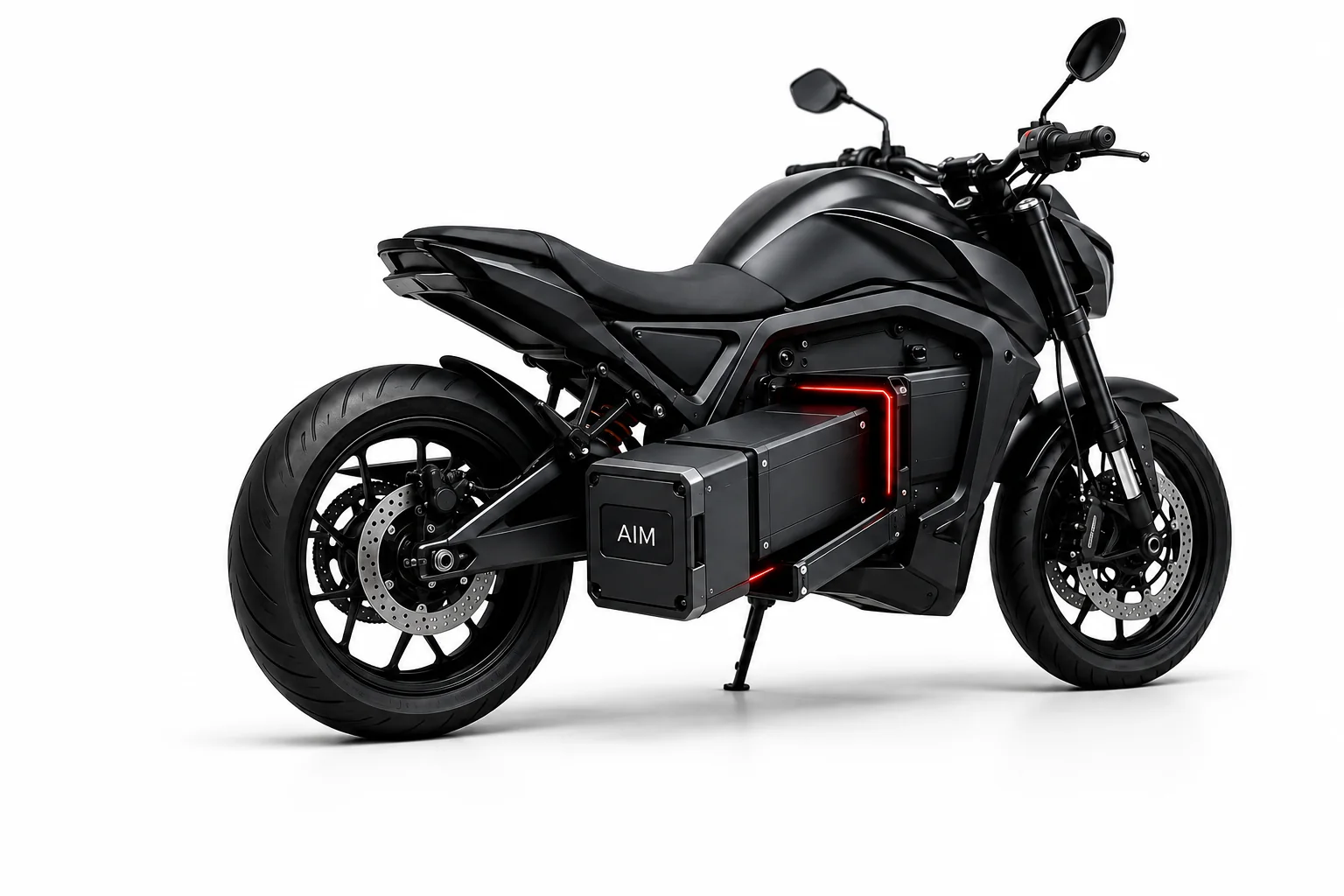
AIM’s mobility direction is based on a modular energy platform that can be adapted to different vehicle categories and mission profiles. Instead of fixing every motorcycle around one battery size, the architecture allows battery capacity to be configured around range, performance, utility and operating requirements.
For city use, a lighter configuration may operate with fewer energy modules. For long-distance touring, performance riding or remote utility applications, additional battery blocks can be added or exchanged. This creates a flexible power strategy where the vehicle does not always carry maximum battery mass, but can scale energy capacity when the mission requires it.
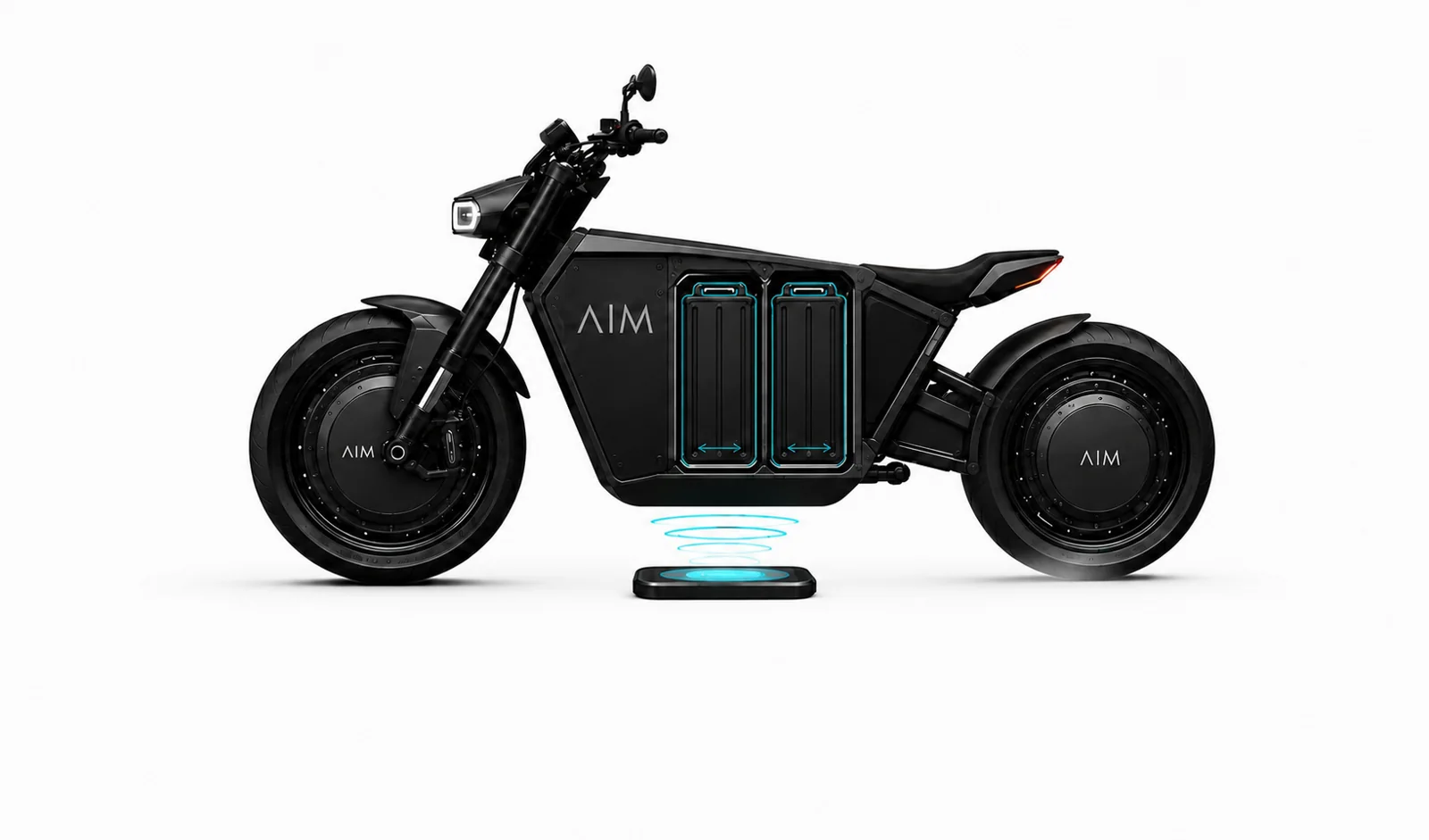
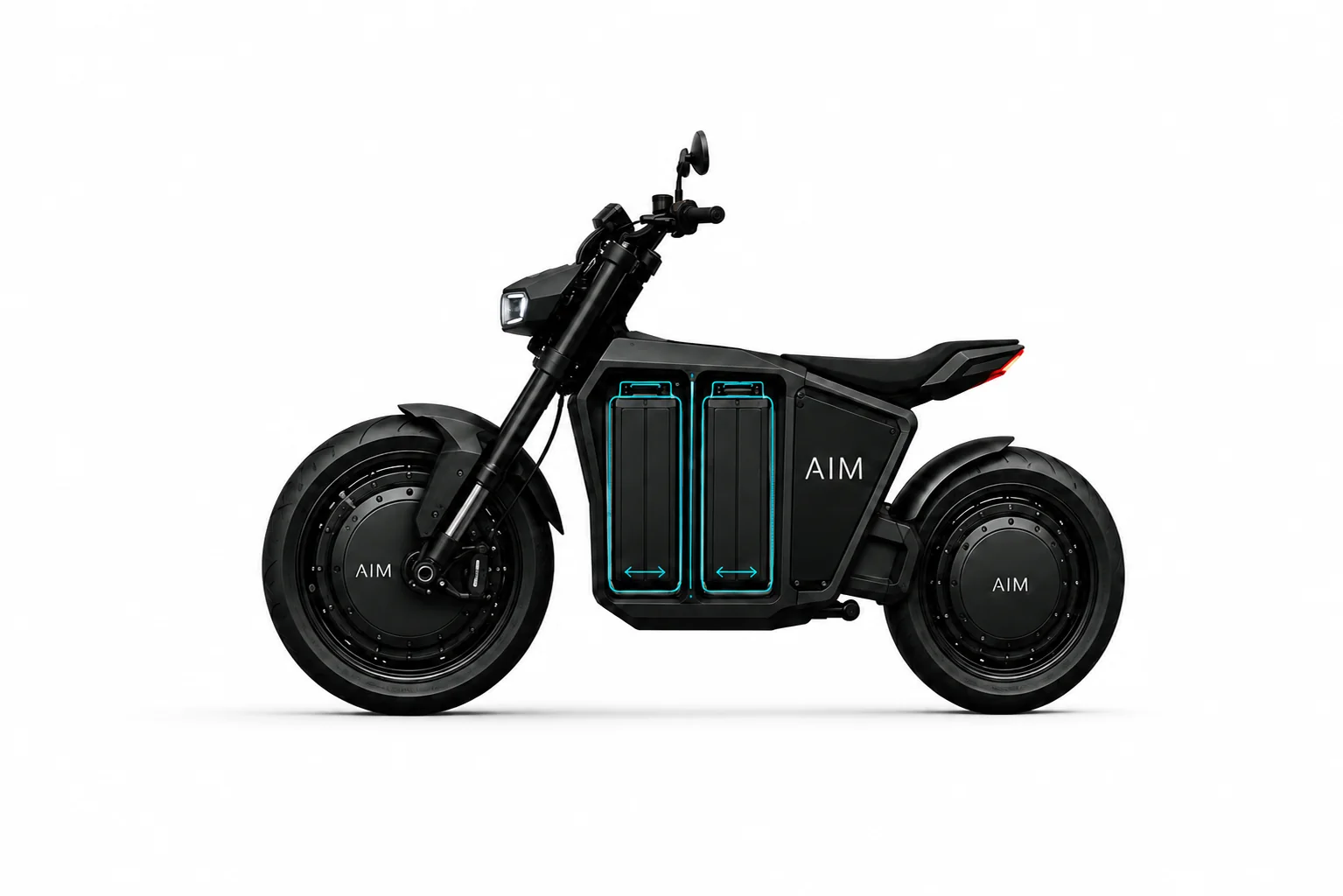
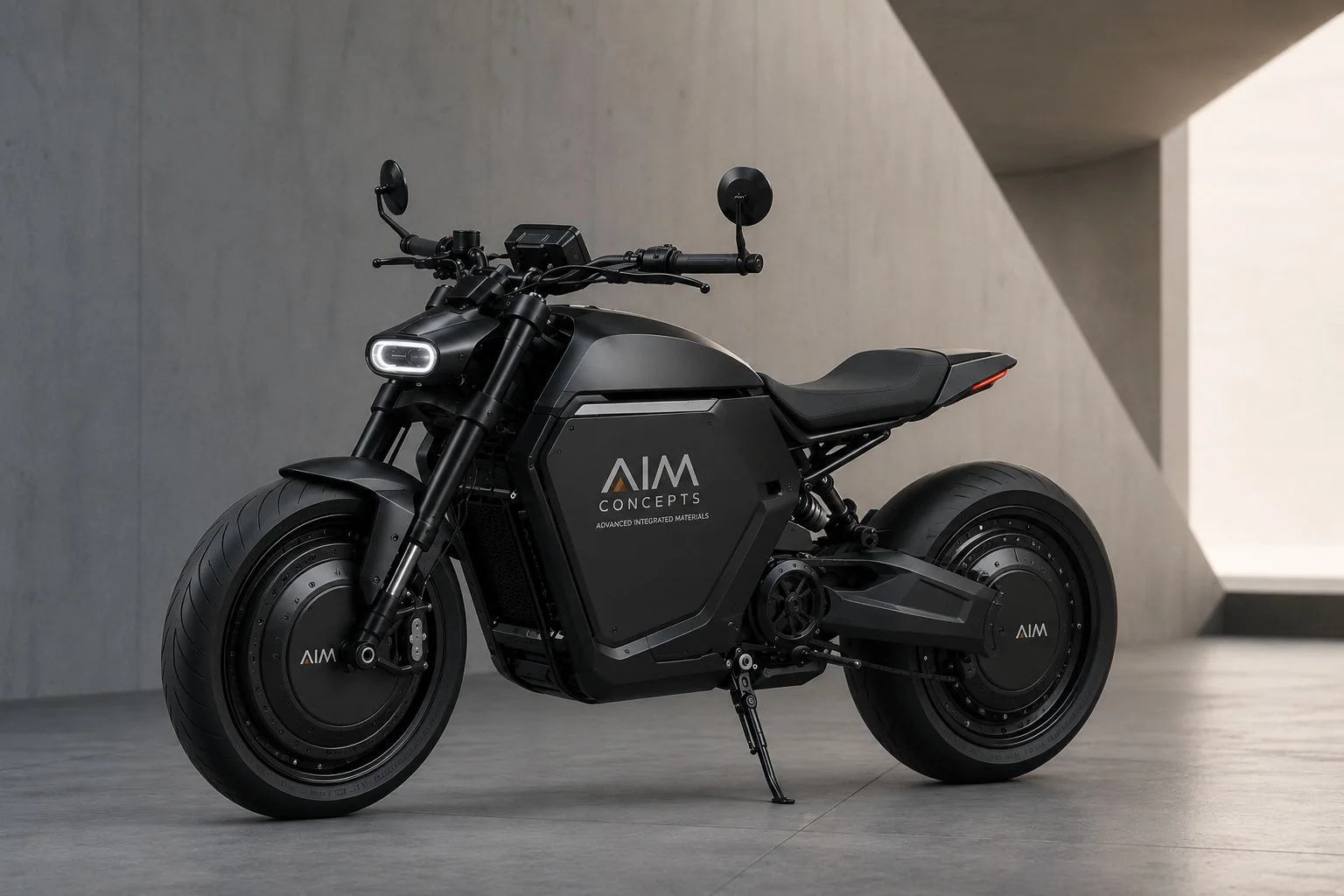
Compact performance concept for city riding and smart urban mobility. One battery block can support daily use, while additional capacity can be added for longer or higher-performance rides.
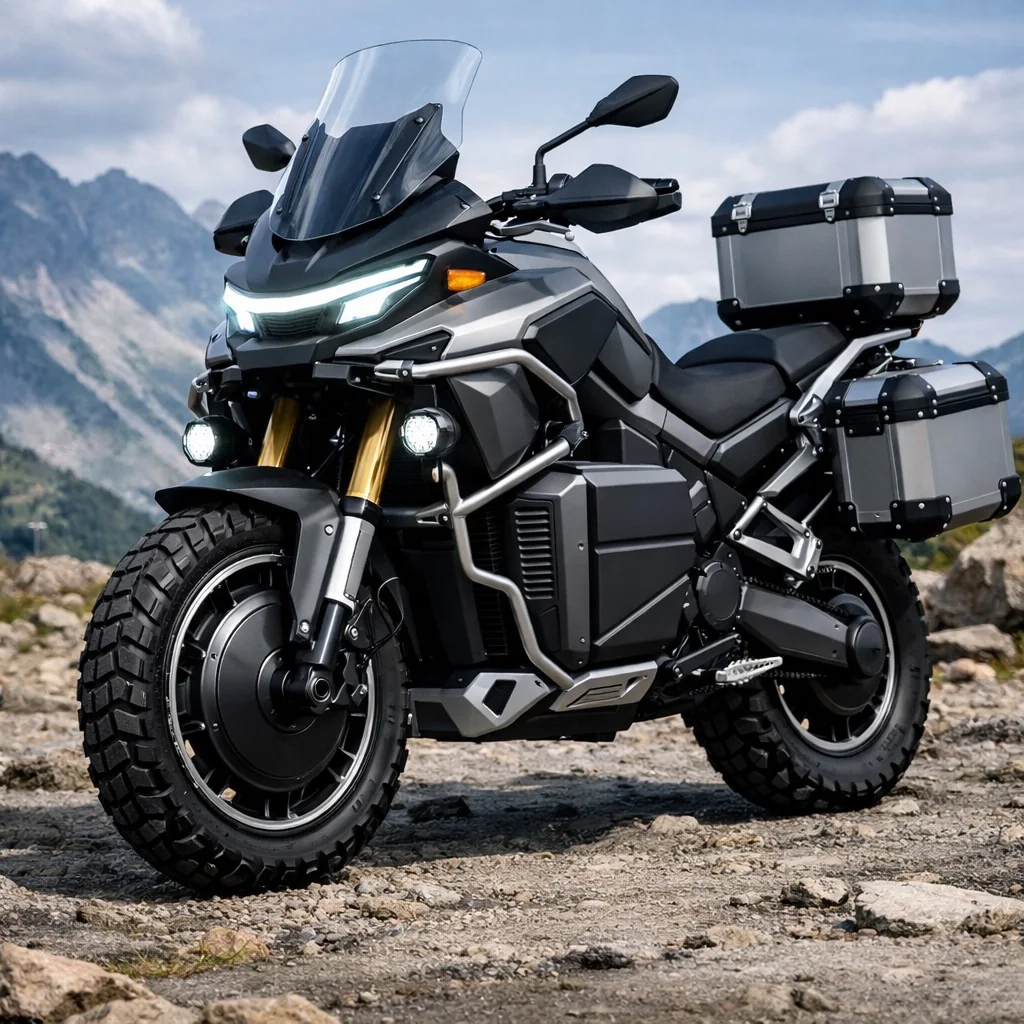
Utility and off-road concept for remote access, infrastructure inspection and adventure mobility. Additional modules can support longer range and more demanding operating conditions.
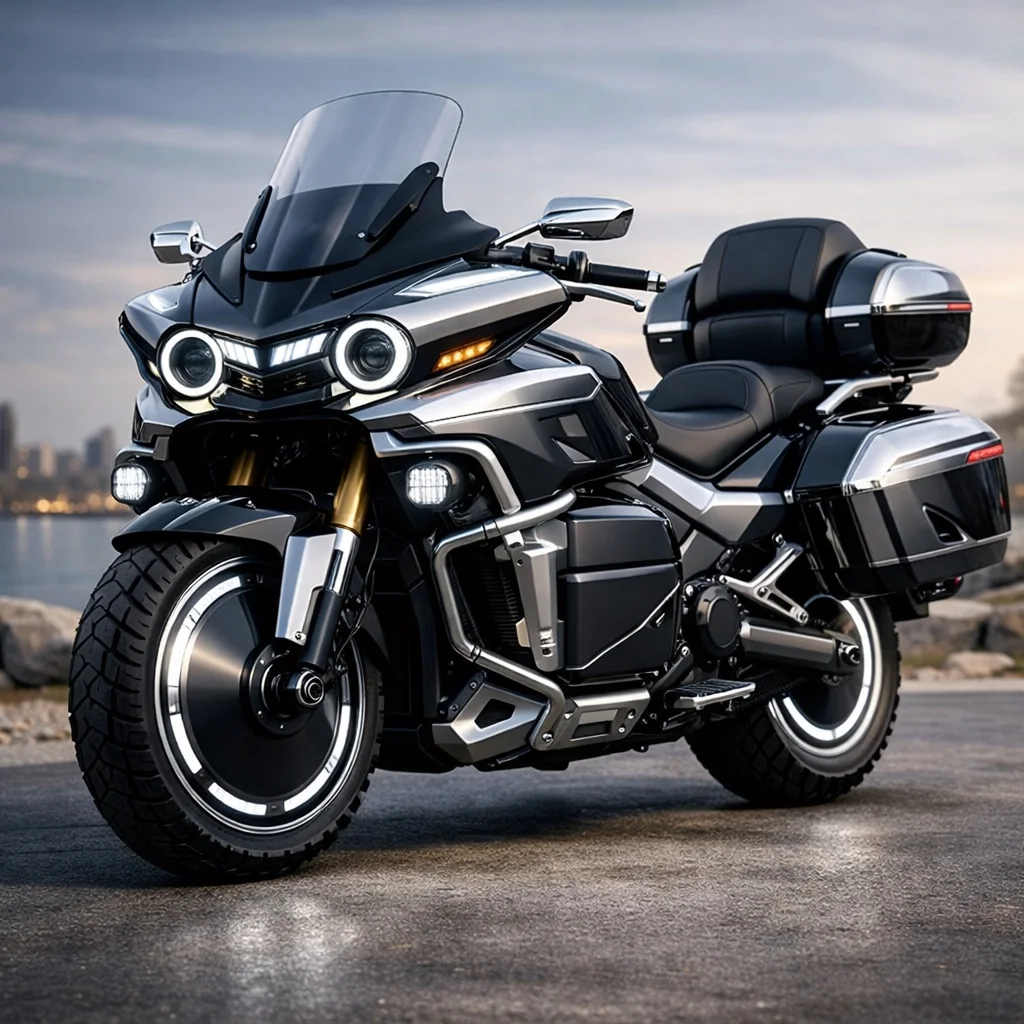
Long-distance touring concept with scalable energy capacity, comfort-focused use and extended travel potential. Battery configuration can be adapted for range and mission profile.
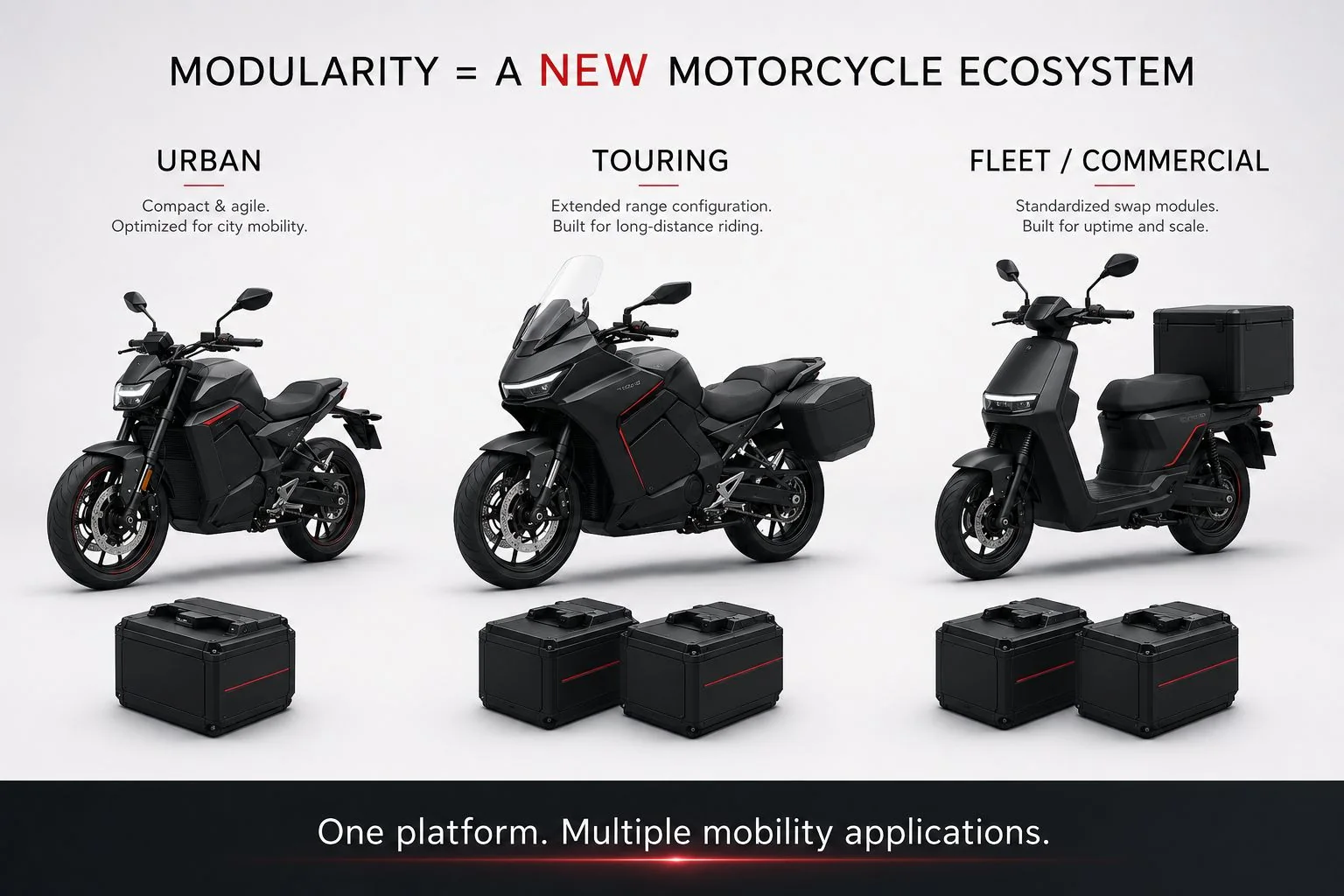
One platform. Multiple vehicle categories. Capacity can be adapted through AIM’s modular hot-swap battery architecture, allowing city runs with fewer modules and longer or performance-focused missions with additional energy blocks.
AIM’s modular mobility architecture is designed around configurable power requirements. A short city route should not require the same battery mass as a long-distance touring mission. By using removable and scalable battery blocks, the vehicle concept can adapt energy capacity to the use case.
Operate with a lighter configuration using one battery block for short urban travel and daily commuting.
Add a second block for higher output, longer routes or more demanding ride profiles.
Configure additional modules for long-distance travel, remote operation or fleet deployment.
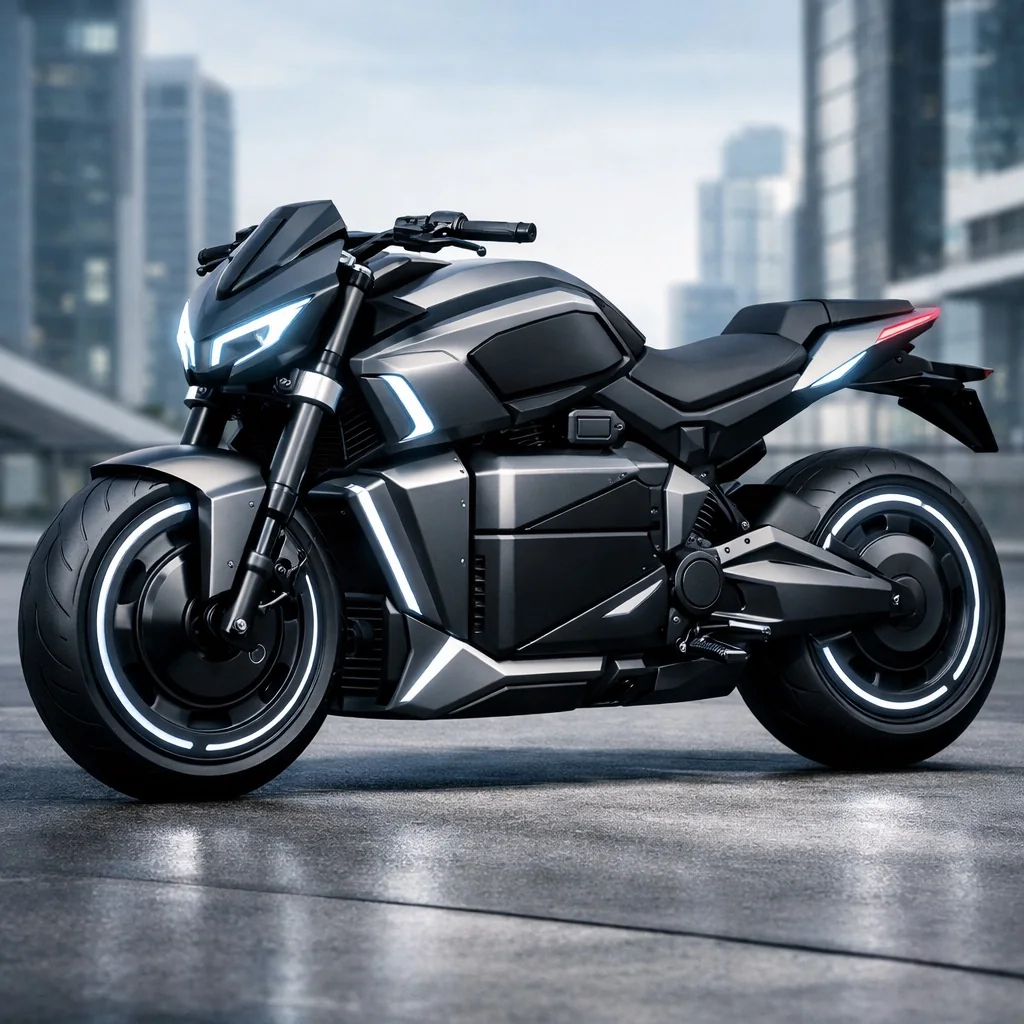
Independent electric drive concepts can enable optimized traction, control and future platform flexibility.
Battery modules can scale across different vehicle configurations, use cases and performance requirements.
Electric architecture can reduce mechanical dependencies and simplify future platform design.
Energy storage can become more than a separate battery package. AIM’s approach treats the energy system as an integrated part of the vehicle structure, supporting rigidity, packaging efficiency, lower center of gravity and improved system-level design freedom.
This concept is particularly relevant for two-wheel mobility, urban transportation and fleet-oriented vehicles where weight, balance, maintenance access and fast operational turnaround are essential.
Traditional vehicle development often requires energy storage systems to be accommodated within fixed vehicle designs. AIM’s approach allows the energy architecture to become a design driver, creating more freedom in packaging, weight distribution and platform configuration.
This can support innovative vehicle formats while improving maintainability, scalability and future product adaptability. The same core energy platform principles can be adapted to different vehicle classes, capacity requirements and operating environments.
Modular battery exchange can support continuous operation without relying only on charging downtime. Systems can be designed for fast removal, replacement and reintegration within fleet environments, commercial applications and urban mobility networks.
This approach can be relevant for operators who need predictable utilization, reduced idle time and scalable energy logistics. Instead of treating charging as a bottleneck, modular exchange can become part of the operational model.
Technology pathways focused on safer and more environmentally responsible material characteristics.
Service-oriented architectures can support maintenance, lifecycle optimization and future upgrades.
Energy systems designed to support multiple vehicle classes, fleet models and operating environments.
AIM mobility systems are designed to support a range of deployment scenarios. The same energy architecture principles can be adapted for urban vehicles, fleet systems, personal transportation and future OEM integration programs.
Optimized for city-based transportation, daily use and flexible electric mobility platforms.
Designed for continuous operation, serviceability and reduced downtime in commercial environments.
Adaptable across multiple vehicle formats, battery capacities and future use cases.
AIM mobility systems are designed for real-world deployment, enabling scalable electric platforms across urban environments and fleet operations. The system approach combines modular battery architecture, integration flexibility, serviceability and future adaptability.
AIM’s mobility direction is not limited to one vehicle shape. It is a platform concept that can support different operating models, including personal mobility, delivery fleets, commercial operators and OEM-led development routes.
Explore mobility energy architecture, fleet deployment models, battery exchange concepts and OEM integration pathways.
Contact AIM